Roof repair · Calgary
Roof repair in Calgary, fixed where the water gets in
I'm Stivi, and I repair leaking and damaged roofs across Calgary with Stivi Roofing. Most roof repairs I do start at a joint: a valley, a vent pipe, a wall where shingles meet a low-slope section, or a skylight. I find where the water gets in, replace any rotten sheathing under it, and rebuild that joint with new membrane, flashing and shingles so it sheds water again.
- Asphalt shingle and concrete tile roofs
- Rotten sheathing replaced, not covered
- Valleys, vents and walls re-flashed
Problem 1
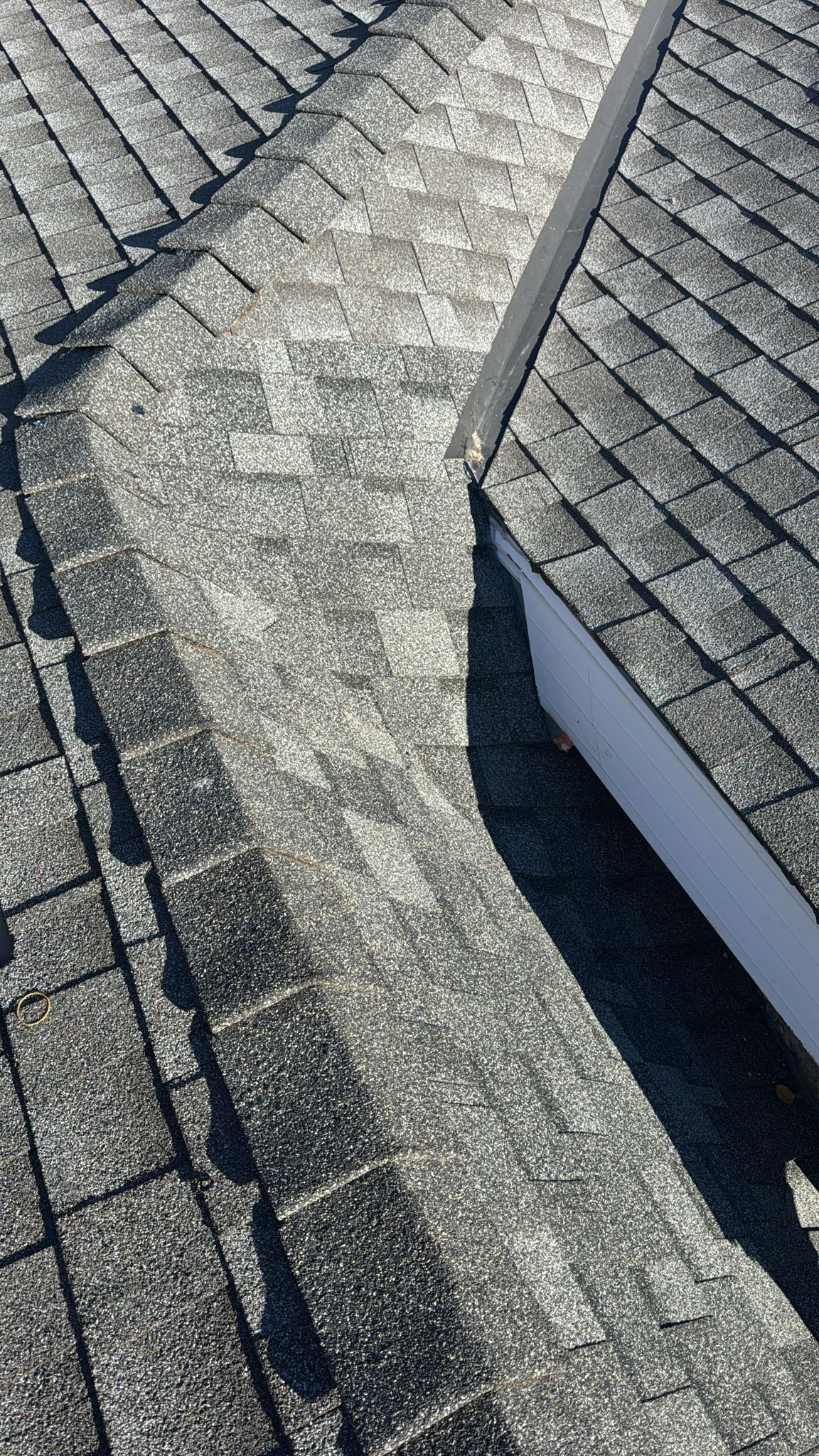
Why do roof valleys and wall junctions leak?
Roof valleys and wall junctions leak because they collect water from two directions at once. A valley carries the runoff of two slopes. A wall junction stops water that runs down the shingles and turns it sideways.
In Calgary, chinooks melt the snow in a valley in the afternoon and freeze it again overnight. Each cycle pushes ice under the shingle edges and lifts the flashing a little further. Where a low-slope section meets a steeper roof or a wall, the shingles sit too flat to shed water quickly, so it backs up under them.
Problem 2
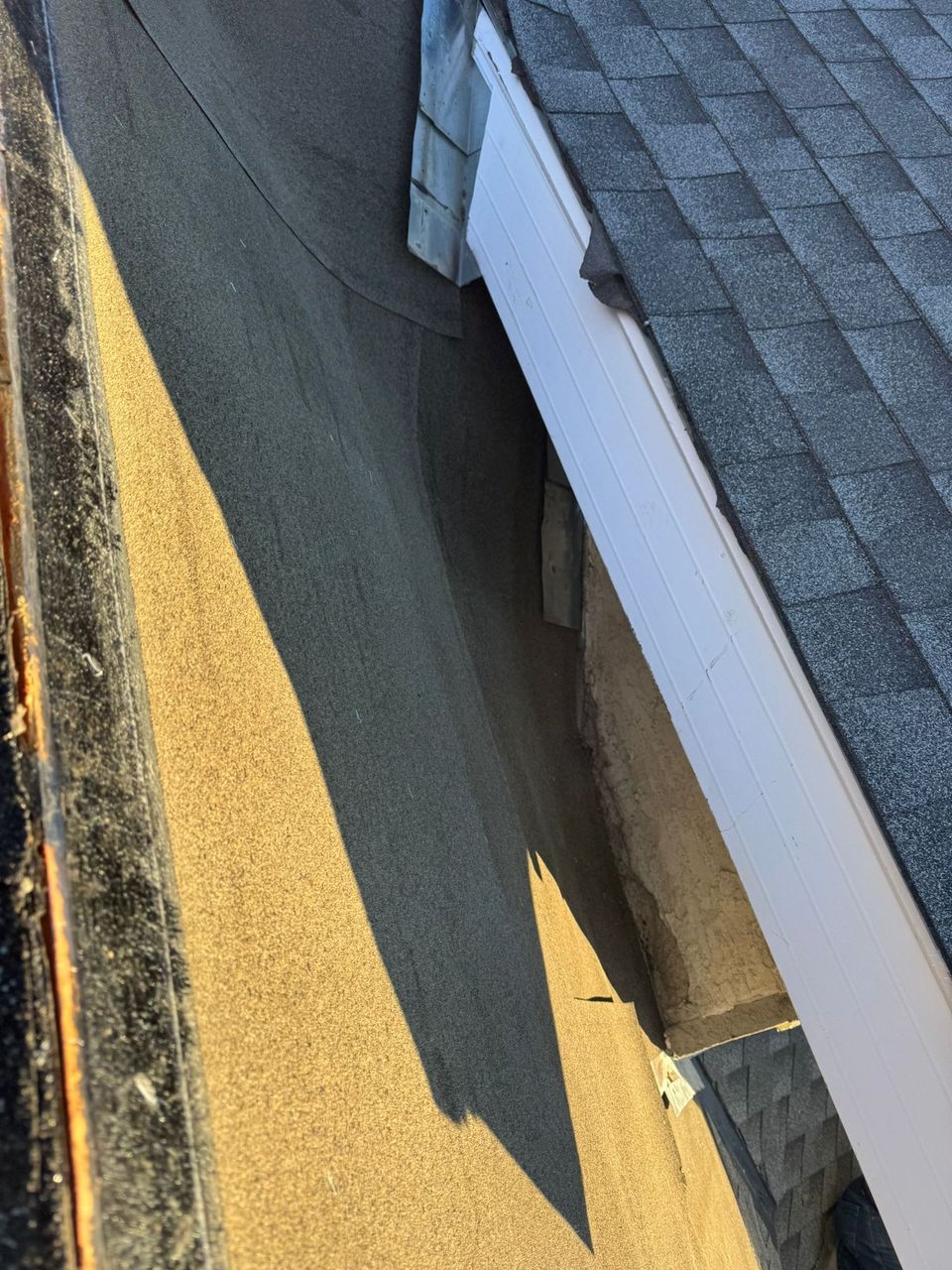
Why does vent flashing fail on a concrete tile roof?
Vent flashing on a concrete tile roof fails because the soft metal around the pipe gets pushed, split or pulled away from the tile, and the gap gets filled with sealant instead of being re-formed. Sealant shrinks and cracks within a few seasons of Calgary sun and frost.
Concrete tiles are heavy, wavy and stand off the roof deck, so the flashing has to be shaped over the tile profile to work. When someone walks the roof, a broken tile or a flattened flashing lets water reach the underlayment below. That's where the leak starts, often years before you see it inside.
Problem 3
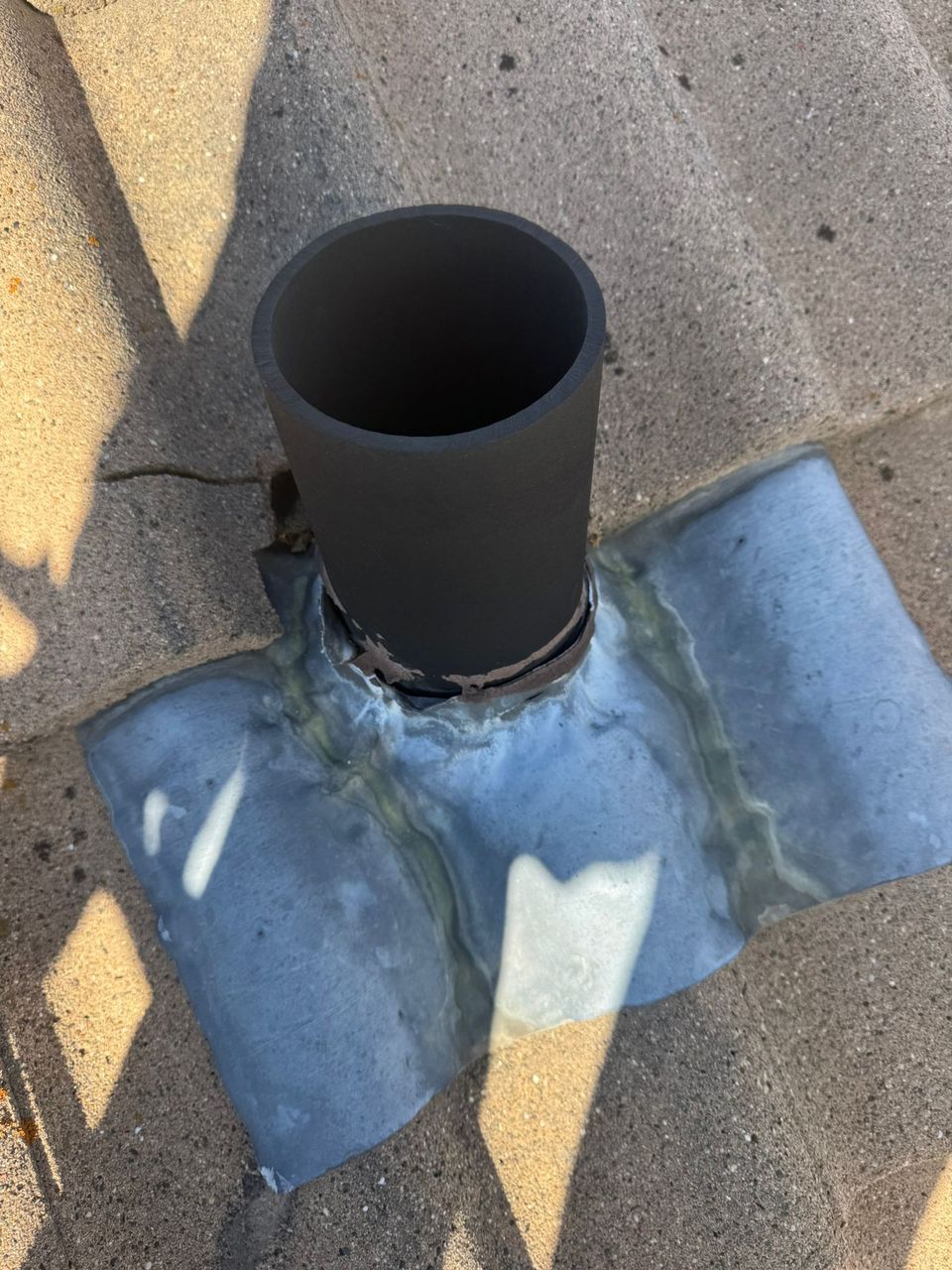
What does a soft or sagging spot on my roof mean?
A soft or sagging spot on your roof means the sheathing under the shingles, the plywood or OSB deck, has been wet long enough to rot. You feel it as a spongy step on the roof, or see it as a dip in the roof line from the ground.
Rot starts under a slow leak that never dripped into the house: water soaks the deck, dries a little, then soaks it again. Low-slope sections and eaves rot first because water and ice sit there longest. Nails stop holding in rotten sheathing, so new shingles over it lift in the next wind.
Problem 4
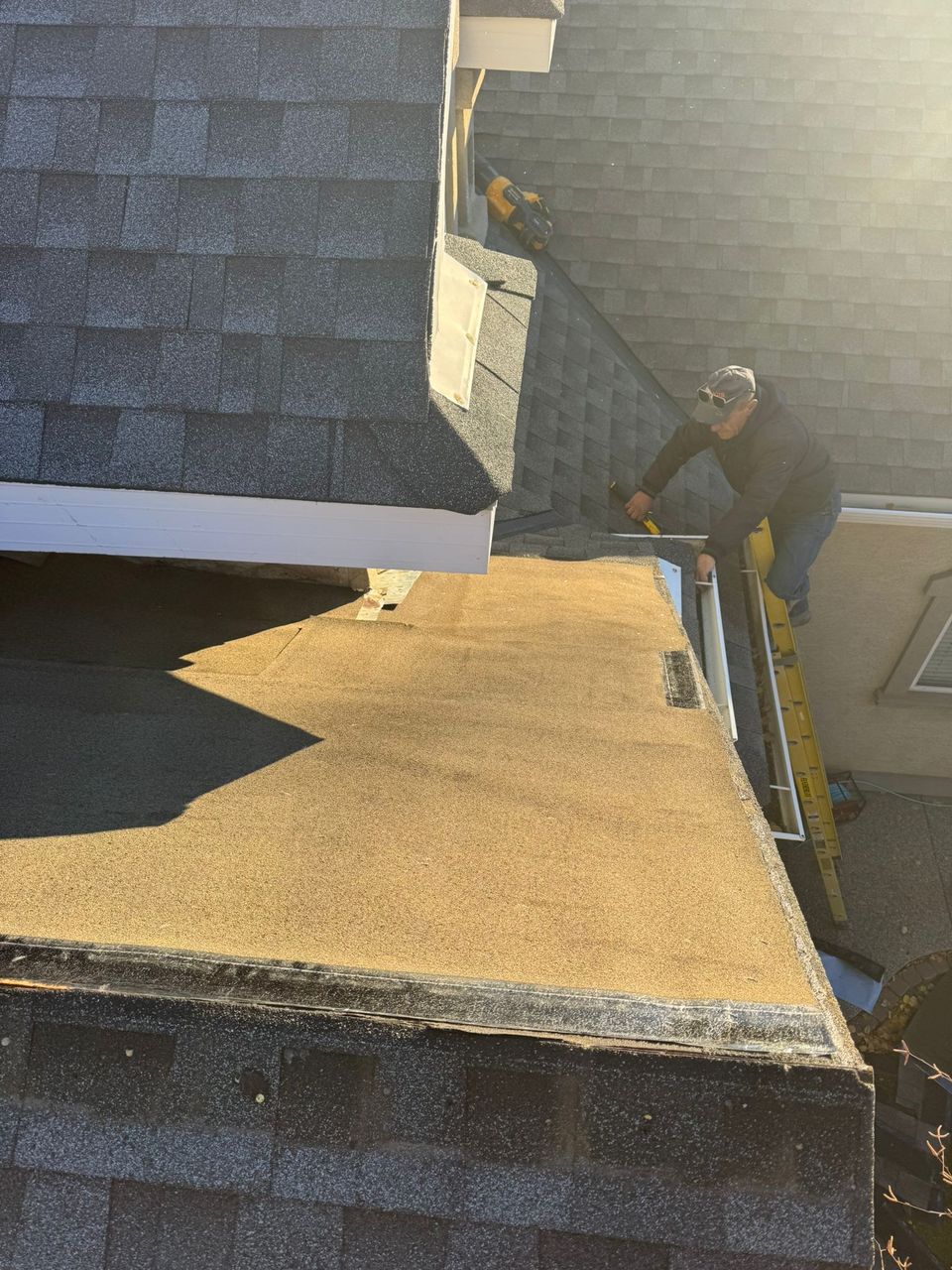
What do hail and chinook winds do to asphalt shingles?
Hail bruises asphalt shingles: it knocks the granules off and cracks the mat underneath, which shortens the shingle's life even when nothing leaks yet. Chinook winds lift shingle tabs, break the adhesive strip that holds each course down, and tear shingles off ridges and hips first.
A single missing or creased shingle exposes the nails of the course below it. Water follows those nail holes into the deck, which is how a small wind repair turns into a sheathing repair if it waits.
What I've learned
A roof leak shows up far from where it starts
The stain on your ceiling is almost never under the hole in your roof. Water gets in at a joint, runs down the underside of the deck or along a rafter, and drips wherever it finds a low point. Patching the shingles right above the stain is why so many roof repairs fail on the first heavy rain.
So I start uphill of the stain, at the nearest valley, vent, wall or skylight, and I open the joint until I find wet wood. Then I repair outward until I reach dry, solid material. That's the difference between a repair that holds for years and one that moves the drip a metre over.
Fix 1
How I repair a leaking valley or wall junction
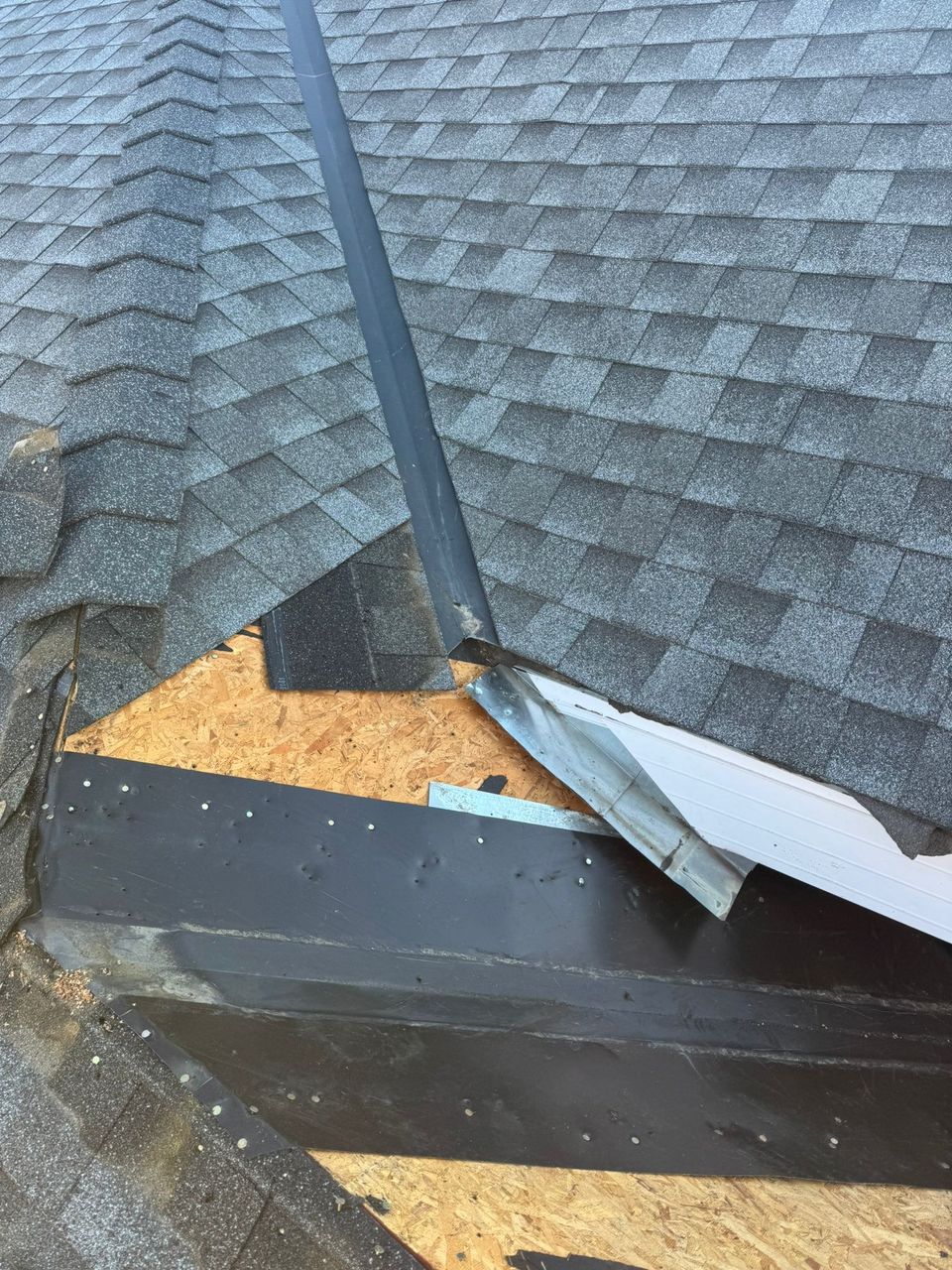
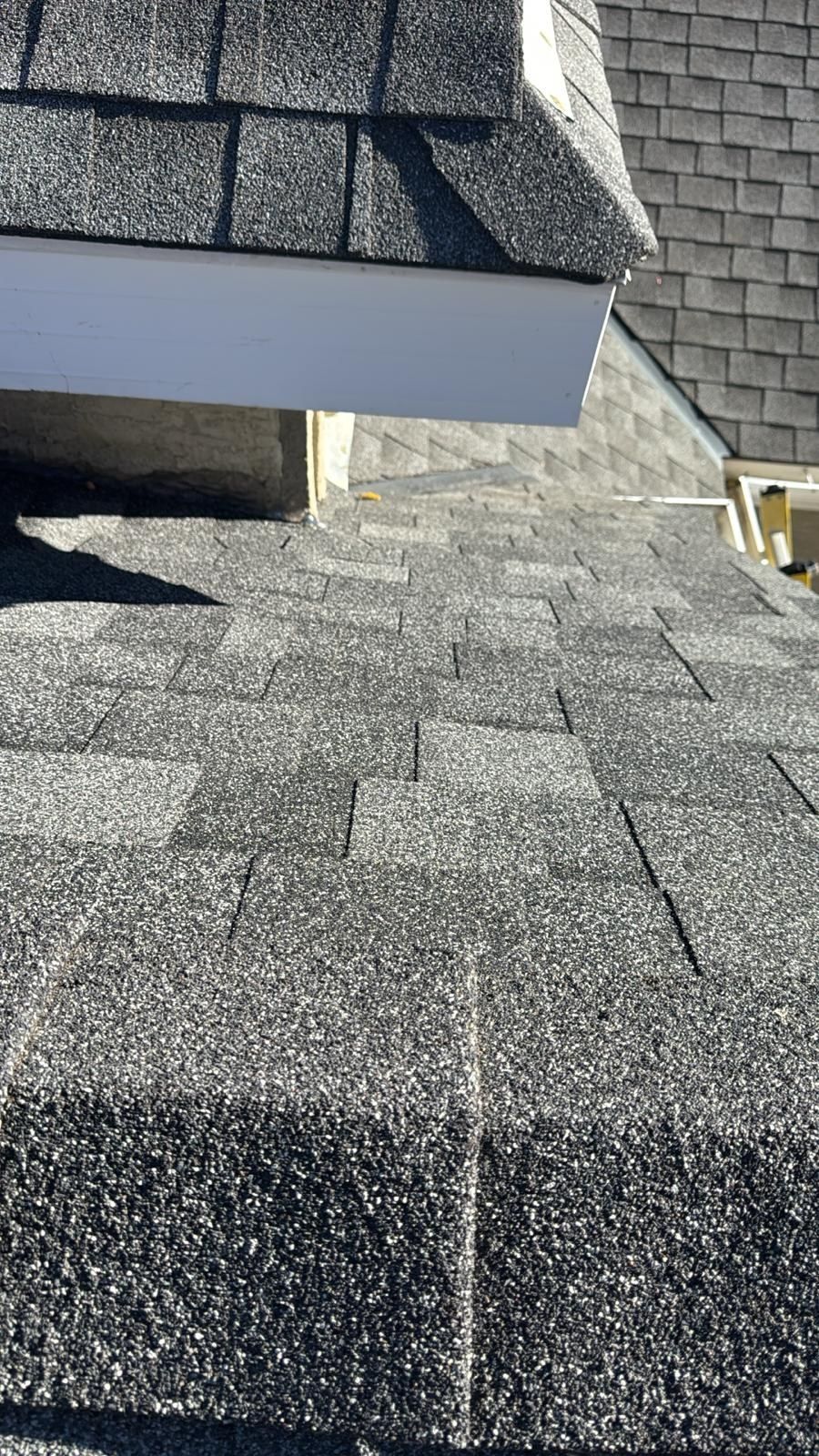
I repair a leaking valley or wall junction by stripping the shingles back to the deck, then rebuilding the joint in the order water travels over it. Self-adhered waterproof membrane goes down first and runs well past the joint. New metal flashing goes over the membrane. Shingles go on last and lap over the metal.
Where a low-slope section meets a steeper roof or a wall, I carry membrane under the shingles and up the wall behind the siding or stucco line, so ice that backs up during a chinook freeze meets membrane, not a shingle edge.
Fix 2
How I replace vent flashing on a concrete tile roof
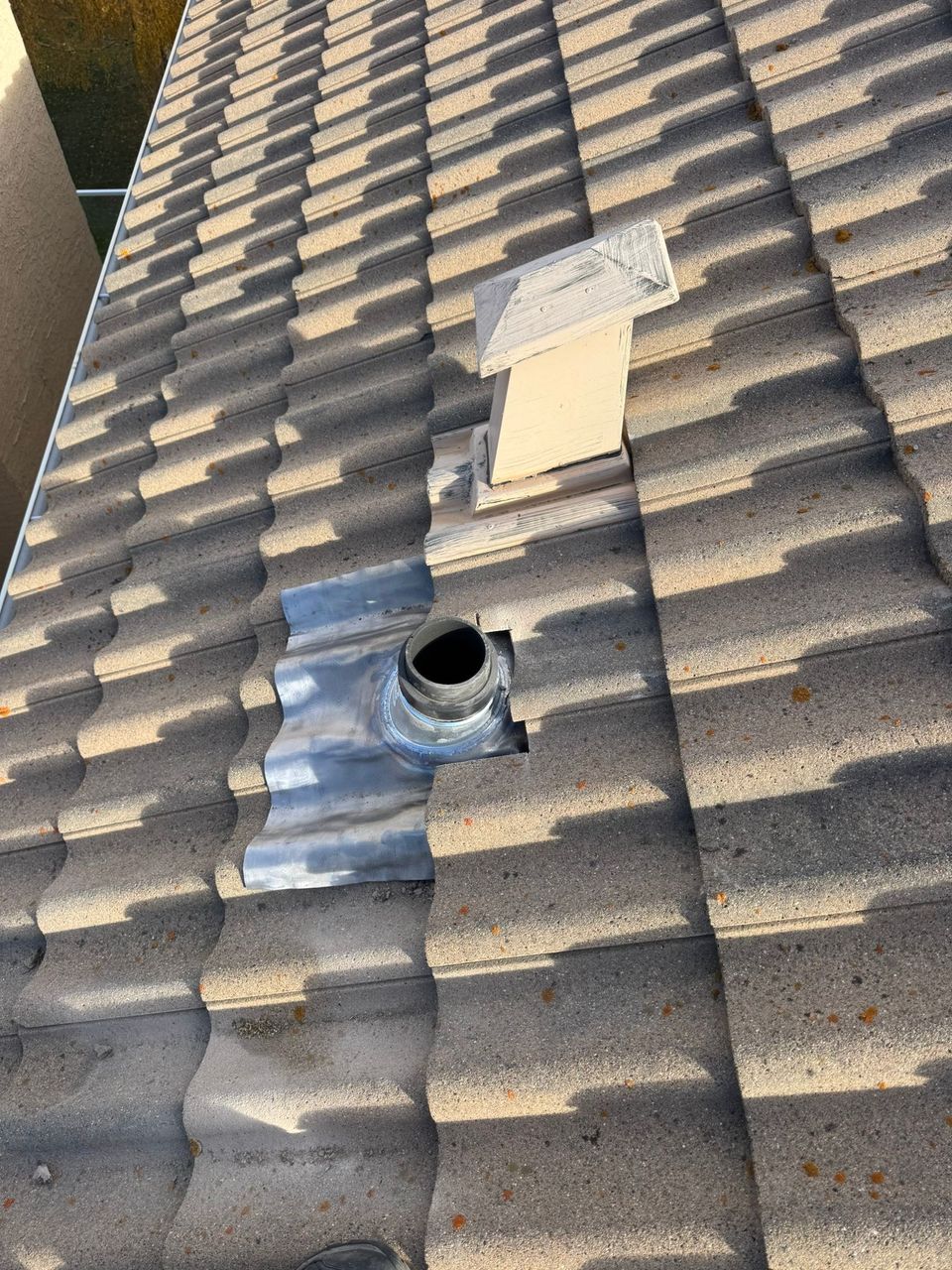
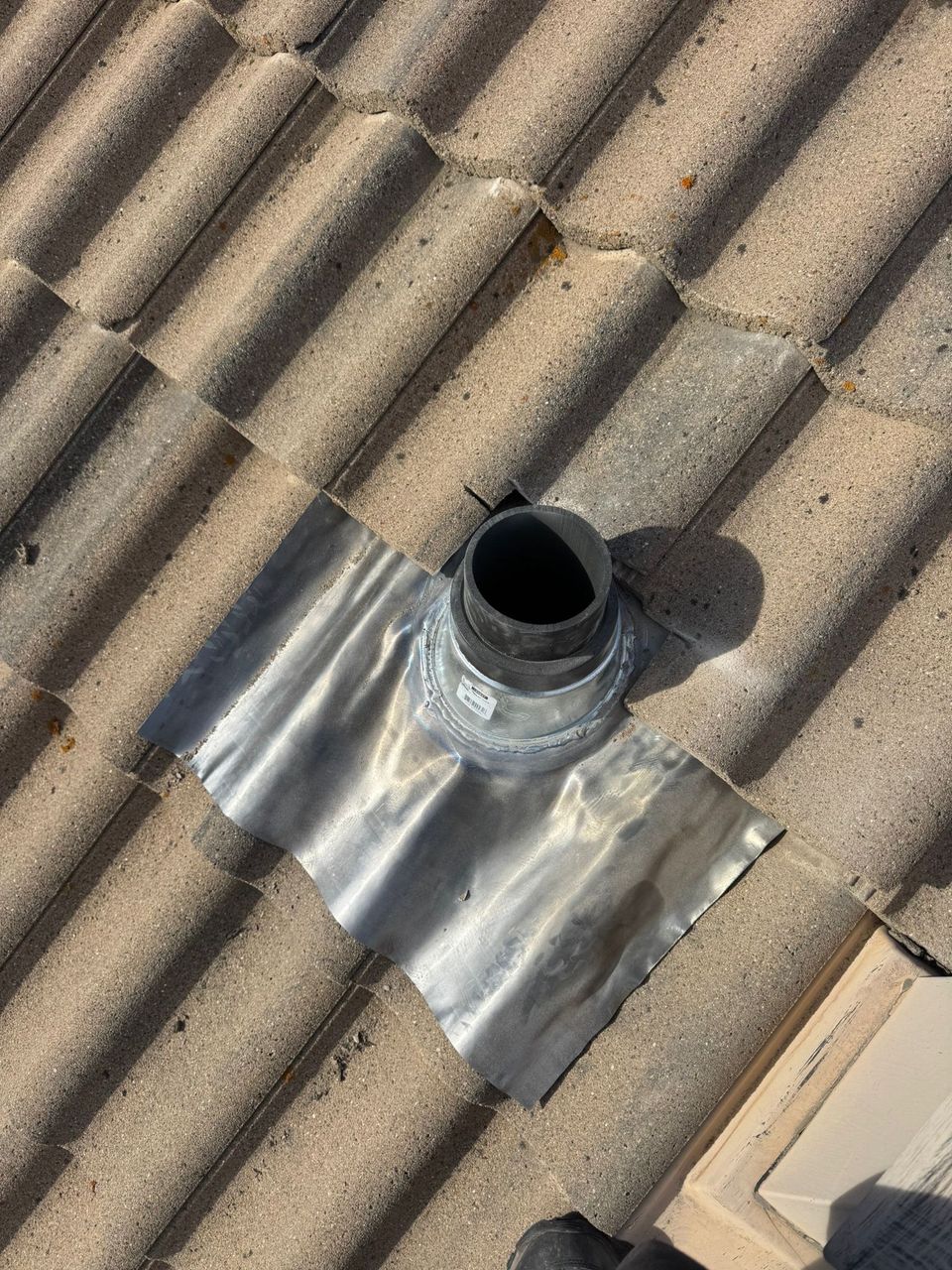
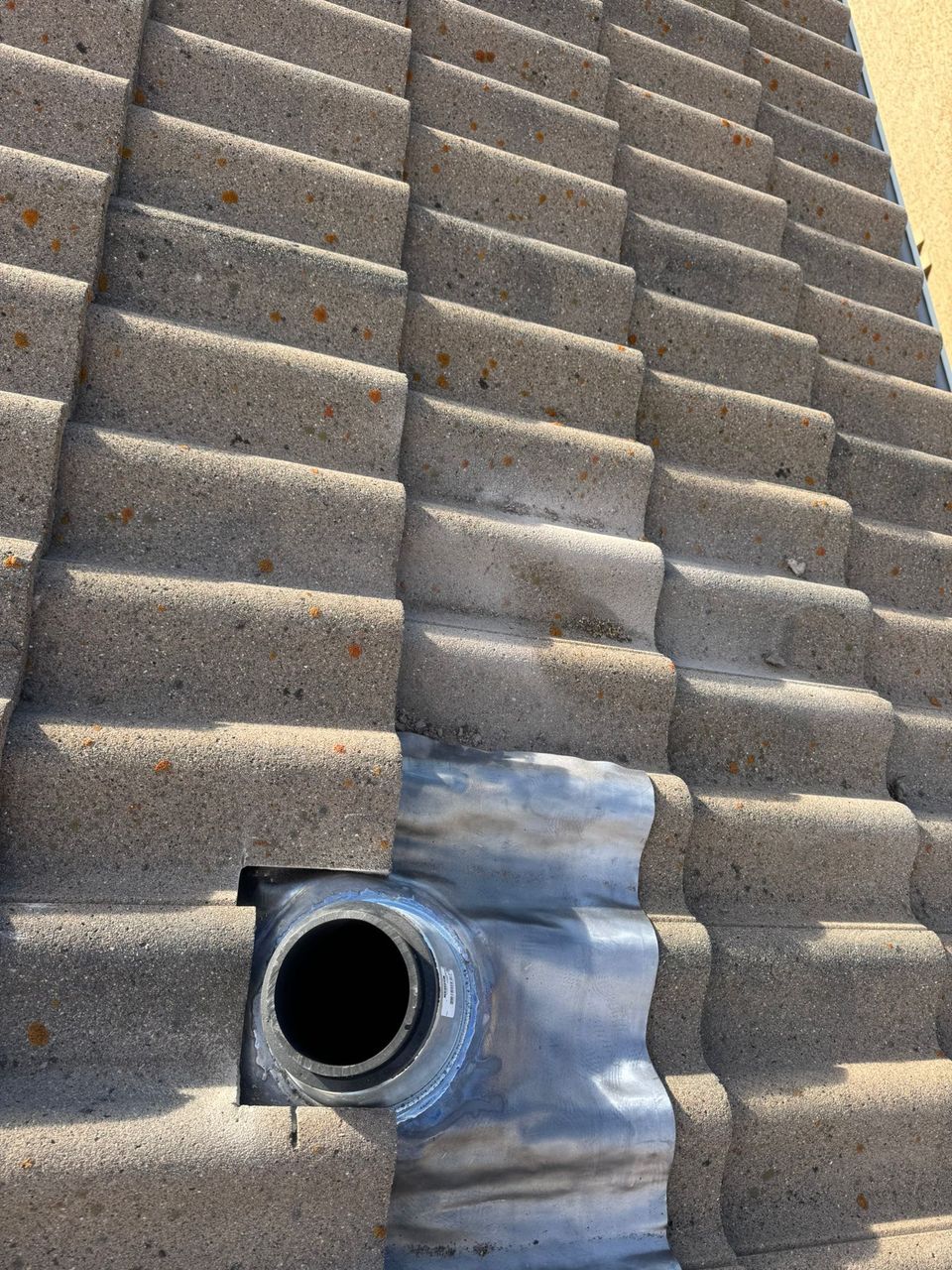
I replace vent flashing on a concrete tile roof by lifting the tiles around the pipe, checking the underlayment under them, and installing new soft metal flashing around the vent pipe. I dress that metal down over the tile profile by hand so it follows every wave, then cut and relay the tiles around it.
The water then runs over the flashing and onto the tile below it, the way it should. Sealant becomes a backup at the collar, not the thing holding the water out.
Fix 3
How I replace rotten roof sheathing
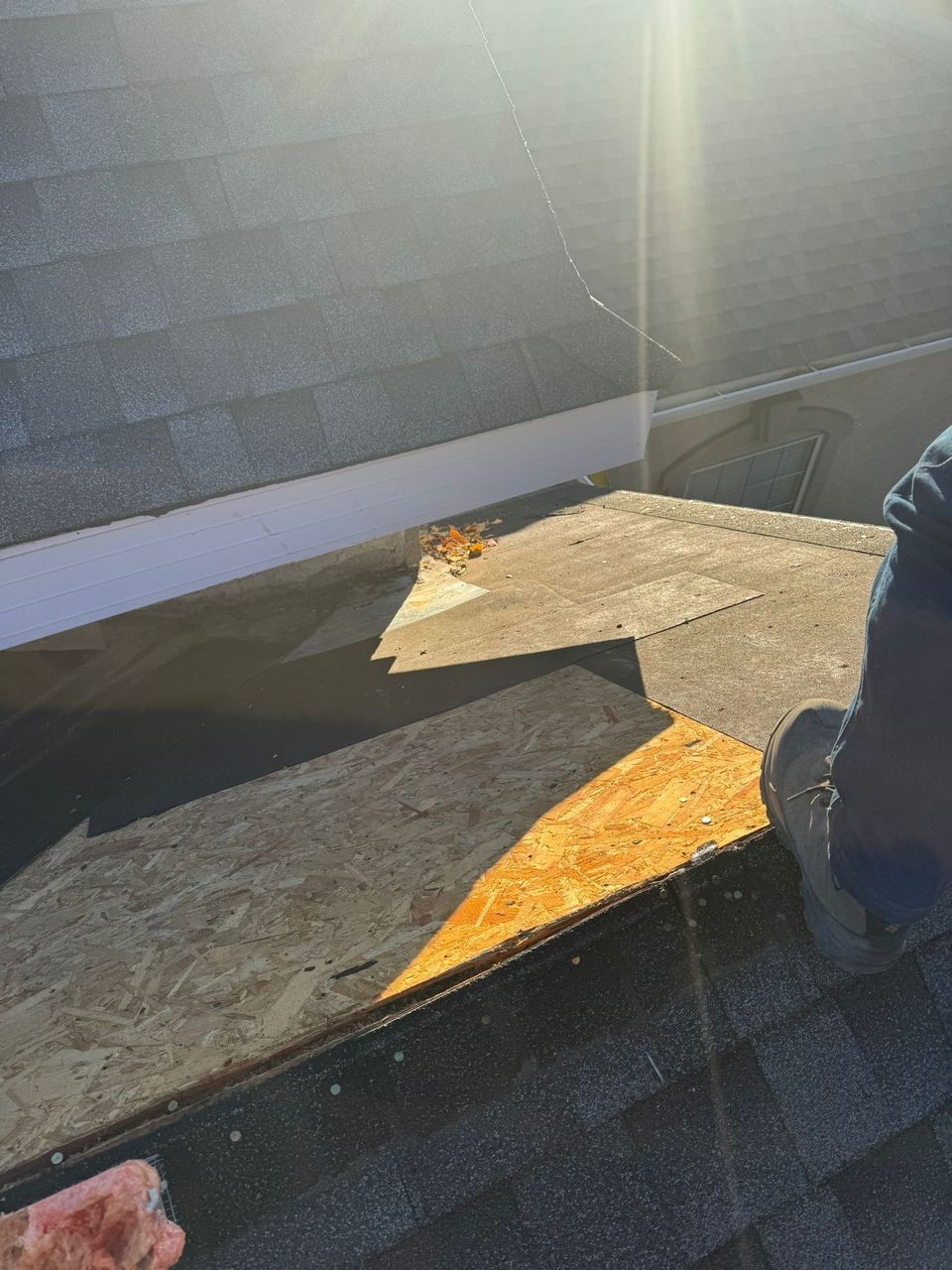
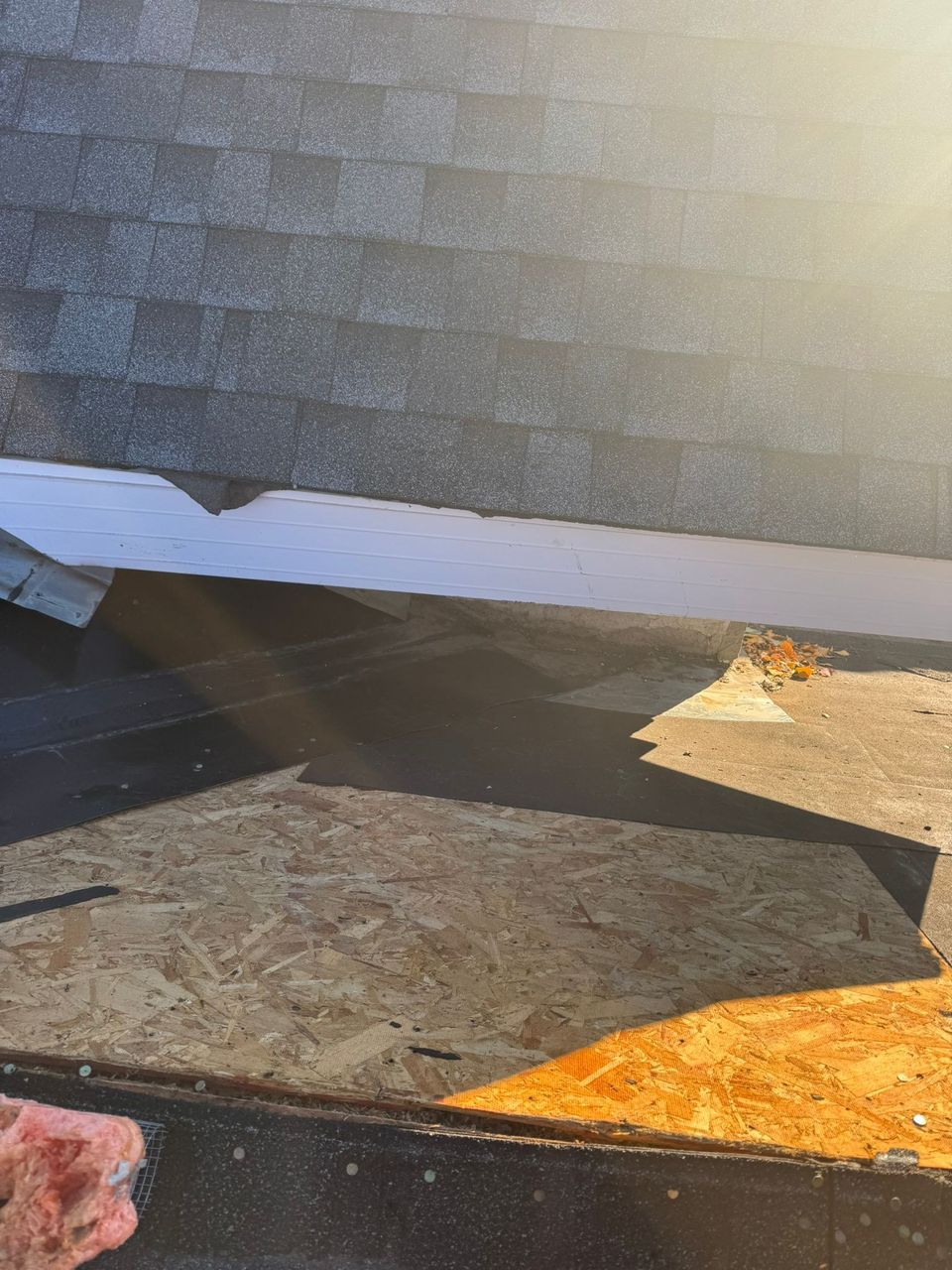
I replace rotten roof sheathing by cutting out every soft panel back to the rafters, fastening new OSB to solid framing, and roofing over it before it sees weather. I don't shingle over soft decking: nails won't hold in it, and the leak that rotted it is still there.
Before the new deck goes down, I find the joint that let the water in. On low-slope sections and eaves, I put waterproof membrane across the whole new deck, not just the edge, because that is where the water sat before.
Fix 4
How I repair hail and wind damaged shingles
I repair hail and wind damaged shingles by removing the damaged courses, checking the nails and deck under them, and installing new shingles that interlock with the old ones, each one nailed in the manufacturer's nailing zone. On ridges and hips, I replace the cap shingles that the wind lifts first.
When the hail damage covers whole slopes rather than a patch, a repair spends your money on a roof that is already at the end of its life. I tell you that when I see it.
Next step
Roof repair in Calgary that stops the leak the first time
Stivi Roofing repairs leaking roofs in Calgary by finding the joint the water comes through, replacing the rotten sheathing under it, and rebuilding the valley, vent, wall or tile flashing so it sheds water again. I work on asphalt shingle and concrete tile roofs.
Send me where the water shows up and a photo or two. I'll come up, find the source and tell you exactly what it takes to fix it. If your leak is on a flat roof, start with flat roof repair. If it drips around a skylight, read skylight repair and replacement.
Roof repair questions I get asked in Calgary
- What should I do if my roof is leaking right now?
- Move what you can away from the drip, catch the water in a bucket, and if the ceiling drywall is bulging, push a small hole in the lowest point so the water drains into the bucket instead of bringing the ceiling down. Stay off a wet roof. Then send me photos of the ceiling and, if you can see it safely from the ground, the roof above it.
- Can you replace just a few concrete roof tiles?
- Yes. Concrete tiles are laid individually, so I lift the tiles around the problem, replace the broken ones or the flashing under them, and relay the tiles in their courses. Before I do, I check the underlayment below the tiles, because on a tile roof the underlayment is what keeps the water out once it gets past the tile.
- What is the most common roof repair?
- Flashing repairs. Most of the roof leaks I fix in Calgary come from the flashing around a vent pipe, along a wall, in a valley or around a skylight, not from the shingles in the middle of a slope.
- Should I replace my roof if it is not leaking?
- Not just because of its age. Replace it when the shingles are curling, cracking or losing granules across whole slopes, or when hail has bruised them widely. A roof that is not leaking yet but shows those signs is worth an inspection before the next winter of freeze-thaw.
- How do I find a roof leak if I have no attic?
- Without an attic, water runs along the underside of the roof deck before it shows on your ceiling, so the stain is usually downhill from the real entry point. I start at the nearest joint uphill from the stain, a vent, a wall, a valley or a skylight, and work outward from there.